


Tag Archives: Salmon

Enough is enough — I’m fighting to protect Skagit farmland

As a farmer myself, I know what it takes to keep the land productive and to pass it down to the next generation. That’s why I can’t stay silent when outside interests try to take our farmland out of production.

Diking and Drainage districts in the Skagit Valley had an agreement with the National Marine Fisheries Service (NMFS) since 2010 to ensure that infrastructure projects like tidegates had a blanket authorization for maintenance and repair and that there is district support for estuary restoration projects. This was followed by a broad stakeholder process that developed a strategic Estuary Restoration plan. This all came crashing to a halt when NMFS withdrew its programmatic biological opinion and authorization for permits after being threatened with a lawsuit from environmental advocates. This meant that the districts then would have to pursue each permit individually. Four years of litigation, delayed maintenance and a lack of meaningful engagement has ensued. I have stood up — and will continue to stand up — against these efforts. I have sponsored a budget proviso for the last 3 years to fund a transparent mediation process to bring local, state, federal, and tribal governments to the table to find a solution. Instead of coming to the table with solutions, NMFS has been unable to participate in any productive or meaningful way

The loss of the programmatic BiOp and the loss of a strategic, well support plan for estuary restoration occurred at the same time that Seattle City Light began pursuing a plan that would condemn productive Skagit Valley farmland and convert it to salmon habitat — even though Skagit County already has a collaborative recovery plan in place that protects both fisheries and farms. This isn’t about fixing problems in their own watershed. It’s about avoiding their responsibility to provide fish passage where it’s actually required, while using eminent domain to take some of the richest farmland in the nation. Instead of committing to fish passage at the SCL dams, they have been putting out a narrative that the districts and farmers are the problem. We already have a locally driven salmon recovery plan built with farmers, tribes, and county officials working together. Skagit County has a moratorium on converting farmland for offsite environmental mitigation. What Seattle City Light is doing ignores that process, violates property rights, and undermines years of work.

Skagit County’s delta — 60,000 acres that produce over $300 million in crops every year — is one of the last highly productive floodplain soils west of the Cascades. We grow more tulip bulbs than anywhere else in the U.S., along with cabbage, beet and spinach seed, dairy, and countless other crops. Every acre lost is an irreplaceable blow to our economy, our heritage, and our future.

I will keep fighting in Olympia and in the public arena to protect Skagit farmland from being carved up by agencies that have no business meddling here.  Under Executive Order 14219, federal agencies are to rescind any orders that undermine the national interest including regulations that prevent infrastructure development.  NMFS needs to return to the agreed permitting process so that maintenance on tidegates that protect State Route 20 and power and water infrastructure as well as farmland and salmon habitat can recommence.  Additionally, Seattle City Light needs to work on fish habitat within its own lands, not in the Skagit Valley.

We can restore salmon runs without destroying the land that feeds us if everyone involved is willing to collaborate on meaningful solutions.

Yours in service,

Senator Ron Muzzall
10th Legislative District
 

We need more salmon not more salmon conflict

Ensuring a robust salmon recovery has become a daunting and politicized task.The latest proposal championed by the Office of the Governor is an example of the bad practice of creating more conflict rather than offering real solutions. The legislation amounts to an unethical taking of private property that will do nothing to aid salmon recovery, while allowing politically connected interests who are doing more harm to those efforts off the hook. The proposals also conflict with the Growth Management Act’s goals of preserving valuable farmland.

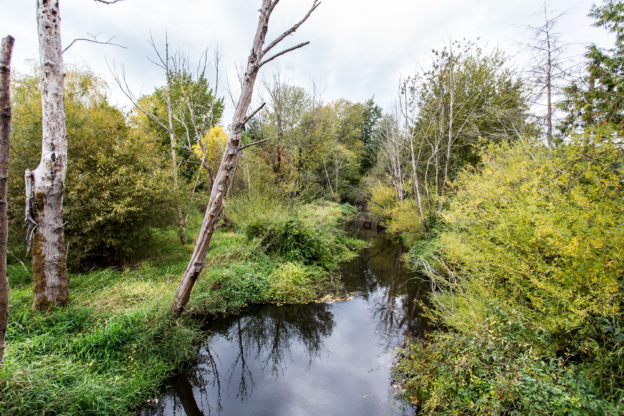
The bills working their way through the Legislature, Senate Bill 5727, SB 5665 and a House companion bill all have the same language with the stated goal of increasing riparian habitat. They operate under the faulty assumption that these buffers are the universal solution to increase salmon populations. Studies show, however, that other issues are likely having a more significant impact on salmon returns and riparian buffer zones are far removed from these causes.

It makes no sense to require property owners along the Skagit River to create and pay for large buffers of up to 200 feet on both side of a body of water. Failing to adhere to the onerous requirements in the legislation could mean significant financial penalties of $10,000 a day per instance of violation, according to the bill. Private property owners will be burdened with an extreme cost to achieve an ideological goal that will not help our salmon recovery efforts. It completely ignores the progress and outcomes of a voluntary stewardship program by those who call the Skagit River delta home.

There is a larger issue being ignored that could more immediately help salmon along the Skagit River. Namely, that Seattle City Light’s three dams along the Skagit River have no fish passages to allow spawning salmon to return home. An area tribe is currently suing the public entity over this issue and, incredibly, City Light continues to obfuscate and shirk the responsibility of having salmon recovery requirements imposed on their dams.

Rather than the government taking people’s property rights away, Seattle City Light could practice what they preach and build the infrastructure to help salmon get through their dams, opening approximately 40% of the river that is currently inaccessible for spawning. Putting the onus on private citizens, without any evidence that this approach will work while remaining silent about the complete inaccessibility of the watershed caused by Seattle City Light, is the height of hypocrisy. What is more, the governor’s proposed budget grants millions in state taxpayer money to City Light without any sideboards on how they should spend it to finally address the salmon passage issue.

Those whose lives and livelihoods are so intimately connected to the bounty the Skagit River provides know what they are doing. They’ve been doing it without the heavy hand of state government. Instead of acknowledgment and consultation they are met with contempt. Now more than ever, we need a rational, evidence-based approach to solve these issues so that we can have more salmon, not more conflict.

Skagit legislators call out hypocrisy on salmon recovery proposal

Ensuring the robust recovery of salmon has become a daunting and politicized task. The latest policy proposal championed by the Office of the Governor is facing sharp criticisms from Skagit County-area lawmakers who view it as an unconstitutional taking of private property that will do nothing to aid the salmon recovery while allowing politically connected interests that are doing more harm to salmon-recovery efforts off the hook. The governor’s solution directly conflicts with provisions of the Growth Management Act that require preservation of farmland.

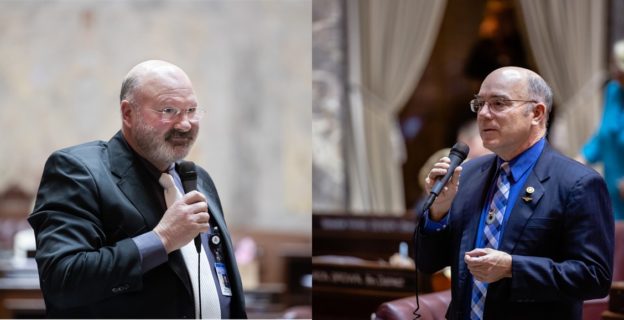
Senate Bill 5727 and SB5665 are nonstarters for 10th District state Sen. Ron Muzzall and 39th District state Sen. Keith Wagoner, whose districts include parts of the Skagit River Basin. They argue that the proposal to require property owners along the Skagit River to create and pay for large buffers is an unethical land grab.

“If the policies in these bills are adopted, private-property owners will be burdened with an extreme cost to achieve an ideological goal that won’t help our salmon-recovery efforts,” said Muzzall, R-Oak Harbor. “It’s indefensible.”

Earlier this year, the state Department of Ecology moved to implement a policy that would have taken away livestock owners’ ability to water their livestock by requiring additional water rights. Similarly, this salmon recovery-related legislation seeks to take away private-property rights by requiring non-use of an estimated 200 feet of land on either side of a body of water.

Under the governor’s request legislation, new programs are established with onerous requirements for compensation to restore riparian habitat along targeted watersheds. Muzzall and Wagoner point to a larger issue being ignored that could more immediately help salmon along the Skagit River.

An area tribe is currently suing Seattle City Light over three dams it owns on the Skagit River that have no fish passages to allow spawning salmon to return home. The public entity has lobbied to stop salmon-recovery requirements from being imposed on their dams, including seeking exemptions from federal regulators.

“There is a simple solution here that doesn’t require a new, complex program modeled off an existing one that’s failing,” said Wagoner, R-Sedro-Woolley. “Rather than taking people’s property rights away, Seattle City Light could live by what they say and build the infrastructure to help salmon get through their dams; approximately 40% of the river is currently inaccessible for spawning.”

Currently, riparian lands are managed voluntarily under the Conservation Reserve Enhancement Program and by working forestland owners under the Forest and Fish program. Agriculture land and open space are regulated at the county level. The new bill removes local jurisdiction and gives enforcement authority to the state Department of Fish and Wildlife.

“Putting the onus on private citizens, without any evidence that this approach will work while remaining silent about the complete inaccessibility of the watershed caused by Seattle City Light, is the height of hypocrisy,” added Muzzall.

In the governor’s budget, Seattle City Light is to receive millions in state taxpayer money to finally address the salmon passage issue.

“The state is taking away land from farmers and other private citizens to give to a public entity that’s swimming in money, and the state taxpayers have to foot bill. It’s just plain wrong,” said Wagoner.

You can watch the news conference here.